Showing posts with label Kriss OKai-Koi. Show all posts
Showing posts with label Kriss OKai-Koi. Show all posts
Monday, 22 March 2010

Tuesday, 9 March 2010
Rough Cut
As we have only just begun to edit our sequence is still largely made up of raw footage. Only the first 30 seconds are edited. The rest of the footasge is only a rough guess as to what it may look like.
Final editing for draft 9/03/10
Today we're going to continue editing our thriller in order to make a draft for the end of the lesson. We may try a couple ideas such as laying in order to make two screens so it seems two things are happening at once. the left side with the detective looking for clues and the right side of the victim getting tortured. This will create a surreal effect that will make it seem as if the two scenes are happening at the same time known as split screening.
We are also going to cut our longer scenes as we have around 10 minutes of footage we can use. This will allow us to edit certain scenes giving our thriller the best effects with shot types, this will make the audience feel a lot more suspense while watching the sequence.
We are also going to cut our longer scenes as we have around 10 minutes of footage we can use. This will allow us to edit certain scenes giving our thriller the best effects with shot types, this will make the audience feel a lot more suspense while watching the sequence.
Monday, 8 March 2010
First attempt of first scene
This is our first attempt of making our opening scene which we didn't use because it didn't meet the required quality we needed. What we were trying to achieve was a work/office environment but because we lacked the specific mise-en-scene e.g. costume, table lamp and globe.
Tuesday, 23 February 2010
Evulation Questions
1) In what ways does your product use, develop or challenge forms and conventions of real media products?
2) How does your media product represent particular social groups?
3) What kind of media institutes might distribute your media product and why?
4)who would be the audience for your media product
5) How did you attract or address your audience?
6) What have you learnt about technologies from the process of constructing this product
7)Looking back at your preliminary task, what do you feel you have learnt in the progression from it ti the final product?
2) How does your media product represent particular social groups?
3) What kind of media institutes might distribute your media product and why?
4)who would be the audience for your media product
5) How did you attract or address your audience?
6) What have you learnt about technologies from the process of constructing this product
7)Looking back at your preliminary task, what do you feel you have learnt in the progression from it ti the final product?
Monday, 22 February 2010
Thriller Film Sequence Target Audience
Our film aims to attract an audience between the ages of 15 - 30. We will make it appeal to a young adult and adult audience by using challenging themes such as murder and morality. Furthermore, our use of mise-en-scene to portray the darkness and vulnerability of the victims and main characters will mean younger audiences will not be able to follow the film easily.
Most people under the age of 15 would have trouble following our sequence due to the complex themes of morality and murder. The non-linear ordering may also confuse a younger audience. Because of this, our film will not be suitable to most people under 15.
Our film will feature a lot of modern aspects. For example, the music for much of the sequence will be Dubstep, a genre popular with young people. In addition to this the detective and victims will all be fairly young - this will allow our target audience to empathise with them. Because of these features we believe our film is best suited to people aged 15-30. Older people may struggle to understand aspects of the sequence and find it harder to empathise with the characters.

Most people under the age of 15 would have trouble following our sequence due to the complex themes of morality and murder. The non-linear ordering may also confuse a younger audience. Because of this, our film will not be suitable to most people under 15.
Our film will feature a lot of modern aspects. For example, the music for much of the sequence will be Dubstep, a genre popular with young people. In addition to this the detective and victims will all be fairly young - this will allow our target audience to empathise with them. Because of these features we believe our film is best suited to people aged 15-30. Older people may struggle to understand aspects of the sequence and find it harder to empathise with the characters.
Monday, 1 February 2010
Plot of Thriller
Detective Smith has been tracking the ---- for 2 years. His attempts to apprehend the killer began after his old partner was killed by him. The killers victims are all killed in a similar fashion and share a number of traits. Firstly, they are all gay men. Secondly, all victims are between the age of 20 and 30. Thirdly, 3 kills seem to be made in each city before the killer moves on. The men are first ambushed in secluded areas of the cities and asphxiated with a bag, assumed to be plastic. The men are then taken away to a different location, usually inside, where they are killed with knife thrusts. His acts have inspired a series of copycat murders, which threw the 3 kills theory into jeopardy, but the killers have since been apprehended and the pattern remains strong. A young gay man of 24 has just been murdered in Cambridge, and the kill shows all the signs of the ---- killer.
Planning for filming
Costume
- Victim - Normal clothing to suggest that he is only a citizen.
- Attacker - Dark clothing to represent evil within character.
- Detective - Suit. Messy to suggest he is a relatively new detective. (Shirt with buttons undone/skinny tie loose)
Props
- Attackers weapon - plastic bag. Replica fake gun.
- Newspaper articles created on Photoshop.
Lighting
- Detective's desk lit by lamplight.
- Streets/alley where attack takes place in daylight.
Make-up/hair
- We don't plan to use much make-up, although some may be used to give the image of bruising around the victims neck.
- Mess up/Ruffle up the victims hair.
List of equipment
- Camera/Tripod.
- Character clothing.
- Newspaper articles.
- Attackers weapon. (Bag/Knife)
- Cup of tea.
Times and dates of filming
Location
'Office area' - Media classroom/office.
Alleyway in Cambridge
Actors
'Victim' - Dave
'Villan' - Dave
'Detective' - Sam
Production roles
Director - Dave Haynes
Producer - Kriss O
]Kai-Koi
Sound - Sam Bols
Editing - Dave O'Keefe
Test photos/footage
- Victim - Normal clothing to suggest that he is only a citizen.
- Attacker - Dark clothing to represent evil within character.
- Detective - Suit. Messy to suggest he is a relatively new detective. (Shirt with buttons undone/skinny tie loose)
Props
- Attackers weapon - plastic bag. Replica fake gun.
- Newspaper articles created on Photoshop.
Lighting
- Detective's desk lit by lamplight.
- Streets/alley where attack takes place in daylight.
Make-up/hair
- We don't plan to use much make-up, although some may be used to give the image of bruising around the victims neck.
- Mess up/Ruffle up the victims hair.
List of equipment
- Camera/Tripod.
- Character clothing.
- Newspaper articles.
- Attackers weapon. (Bag/Knife)
- Cup of tea.
Times and dates of filming
Location
'Office area' - Media classroom/office.
Alleyway in Cambridge
Actors
'Victim' - Dave
'Villan' - Dave
'Detective' - Sam
Production roles
Director - Dave Haynes
Producer - Kriss O
]Kai-Koi
Sound - Sam Bols
Editing - Dave O'Keefe
Test photos/footage
Monday, 25 January 2010
Micro and Macro elements within our film
Macro:
Characters - two main characters: abductor and abductee.
Narrative - Man walking around busy location. Crowds thin out. Turns corner and is hit in face with a bat. Blacks out. Wakes tied to chair in dark location. Speaks briefly with abductor. Abductor unmasks himself - man says 'It's you!'.
Atmosphere - at first, outside in the open, everything seems normal. Man then attacked and blacks out. When he awakes the atmosphere has changed - who attacked him? Where is he? Dark lighting and exclusive use of close-ups /extreme close ups will add to the confusion.
Micro:
Camerawork - The scene will begin with an establishing shot of our chosen location. Within the sequence there will be a lot of close ups and extreme close ups which will add to the sense of confusion and panic we hope to create. We may use a point of view shot when the abductee is hit with a bat or weapon of some sort.
Mise-en-scene - Bruises/cuts on victim?
Editing - We will use linear editing to give our sequence a sense of continuity.
Sound - We will use non diagetic sound in the introduction to the sequence, and also diagetic sound that the character will be hearing.
Special Effects - Fake blood (Chocolate sauce if black and white)
Characters - two main characters: abductor and abductee.
Narrative - Man walking around busy location. Crowds thin out. Turns corner and is hit in face with a bat. Blacks out. Wakes tied to chair in dark location. Speaks briefly with abductor. Abductor unmasks himself - man says 'It's you!'.
Atmosphere - at first, outside in the open, everything seems normal. Man then attacked and blacks out. When he awakes the atmosphere has changed - who attacked him? Where is he? Dark lighting and exclusive use of close-ups /extreme close ups will add to the confusion.
Micro:
Camerawork - The scene will begin with an establishing shot of our chosen location. Within the sequence there will be a lot of close ups and extreme close ups which will add to the sense of confusion and panic we hope to create. We may use a point of view shot when the abductee is hit with a bat or weapon of some sort.
Mise-en-scene - Bruises/cuts on victim?
Editing - We will use linear editing to give our sequence a sense of continuity.
Sound - We will use non diagetic sound in the introduction to the sequence, and also diagetic sound that the character will be hearing.
Special Effects - Fake blood (Chocolate sauce if black and white)
Friday, 15 January 2010
Vertigo and Cape Fear
1) What clues does the sequence give you about the film?
2) How does it conform to conventions of thriller?
Vertigo
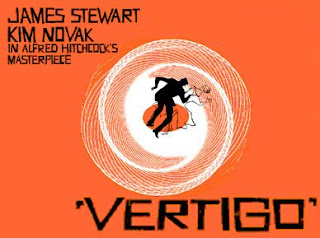
The title of this film means someone gets a feeling of dizziness from being uncomfortable with the surroundings. This film uses a number of clues to say what the film is about and what conventions they use to make it your typical thriller movie.
In the title sequence they use the colour red which connotes death and blood this in turn brings fear to the audience as they view the red eye. Using the micro element of sound, they use a typical thriller theme tune that suggests mystery and action. The swirly patterns they use after the red eye suggest hypnotism and therefore could make the audience believe someone is going to be controlled against their own will. The conventions used to make this thriller more exhilarating is that the character shown at the start of the title sequence is a female giving a shot of her lips and eyes, this may subject to objectification as character may be seen as attractive. The narrative centres around murder as the colour red is used repeatedly and the micro element of sound helps build up suspense for the viewer.
Cape Fear
The title sequence first shows the viewer rippling water which suggests that it plays a key role in the film e.g. may be the main characters weakness like in the film unbreakable. The scene shows a reflection of an watching eye which suggests superstition and paranoia. With the use of the micro element sound this makes the title sequence seem intense e.g. using drum roles. Still using the convention of reflective imagery it shows an open mouth which suggests danger or some could be in danger. Again using reflective imagery it shows a silhouette of a man is seen as mysterious making the viewer feel the killer will be unknown to them later in the film. The conventions used such as reflective imagery in the water gives a sense of manipulation of the general perspective or visual. Again like in Vertigo objectification is used by using a female at the end of the sequence showing her eyes. This makes the viewer feel as if they are being watched by her as she later tells her story. The micro elements of sound used builds up suspense and gives the title sequence a tense atmosphere.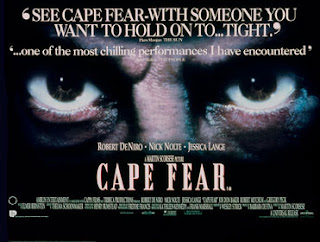
By Kriss Okai-koi
2) How does it conform to conventions of thriller?
Vertigo
The title of this film means someone gets a feeling of dizziness from being uncomfortable with the surroundings. This film uses a number of clues to say what the film is about and what conventions they use to make it your typical thriller movie.
In the title sequence they use the colour red which connotes death and blood this in turn brings fear to the audience as they view the red eye. Using the micro element of sound, they use a typical thriller theme tune that suggests mystery and action. The swirly patterns they use after the red eye suggest hypnotism and therefore could make the audience believe someone is going to be controlled against their own will. The conventions used to make this thriller more exhilarating is that the character shown at the start of the title sequence is a female giving a shot of her lips and eyes, this may subject to objectification as character may be seen as attractive. The narrative centres around murder as the colour red is used repeatedly and the micro element of sound helps build up suspense for the viewer.

Cape Fear
The title sequence first shows the viewer rippling water which suggests that it plays a key role in the film e.g. may be the main characters weakness like in the film unbreakable. The scene shows a reflection of an watching eye which suggests superstition and paranoia. With the use of the micro element sound this makes the title sequence seem intense e.g. using drum roles. Still using the convention of reflective imagery it shows an open mouth which suggests danger or some could be in danger. Again using reflective imagery it shows a silhouette of a man is seen as mysterious making the viewer feel the killer will be unknown to them later in the film. The conventions used such as reflective imagery in the water gives a sense of manipulation of the general perspective or visual. Again like in Vertigo objectification is used by using a female at the end of the sequence showing her eyes. This makes the viewer feel as if they are being watched by her as she later tells her story. The micro elements of sound used builds up suspense and gives the title sequence a tense atmosphere.

By Kriss Okai-koi
Subscribe to:
Posts (Atom)